
From Past to Present
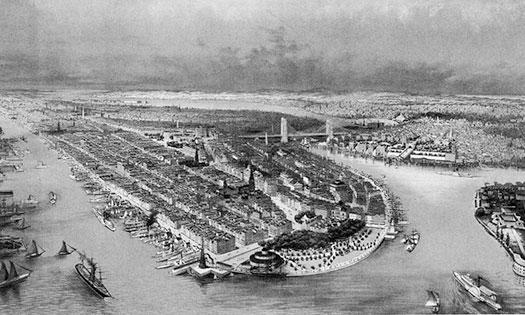
1884
Louis and Rachel Rudinsky immigrate to the U.S. from Belarus in 1884, entering New York through Castle Clinton in Battery Park. They settle on the Lower East Side, where they later open a dry-goods store on Chrystie Street.
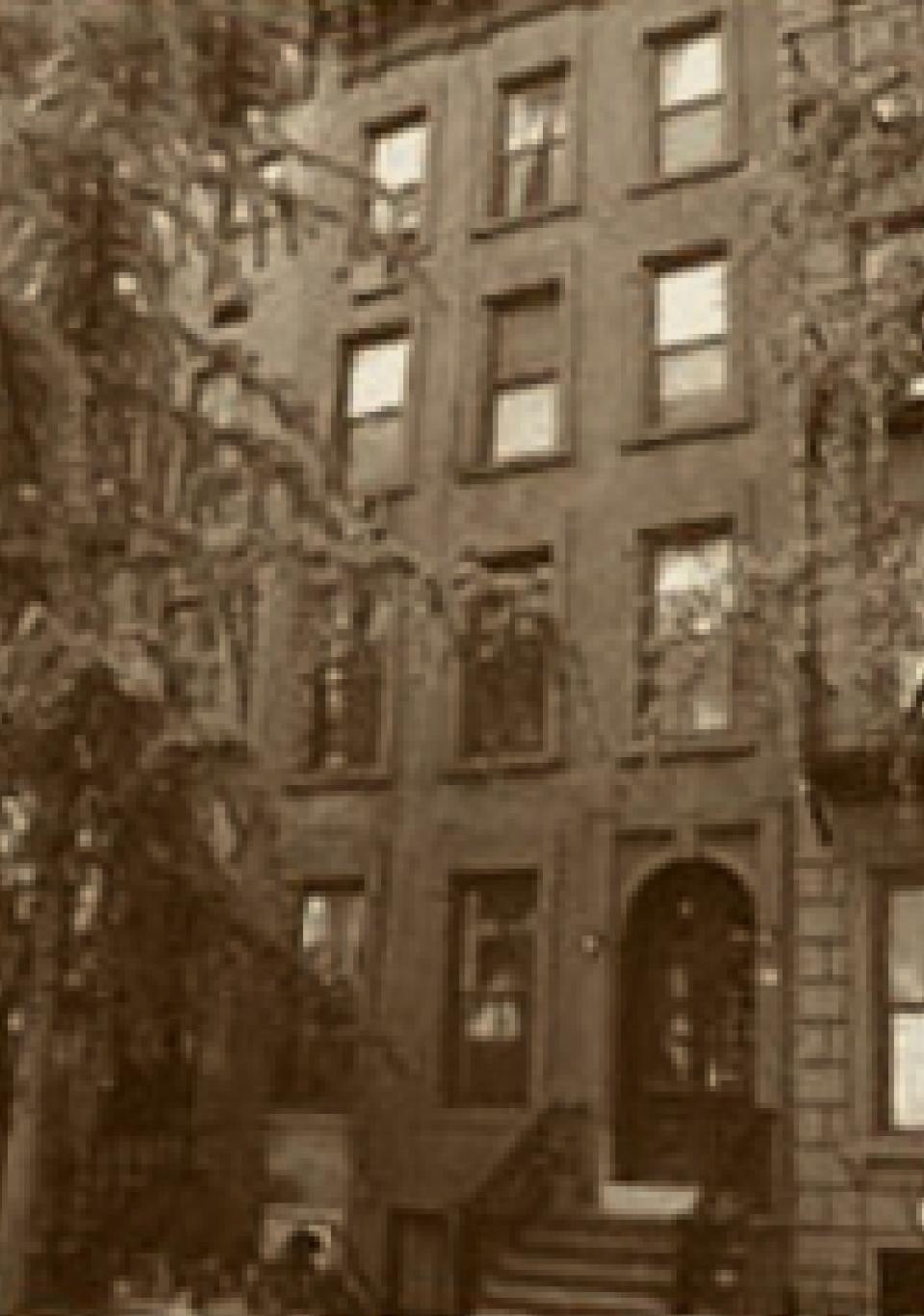
1905
In 1905, Louis buys his first property, a five-story brownstone on 54th Street and Lexington Avenue, starting the family’s legacy of owning real estate in New York. While no longer the original brownstone, the family still owns this site; it is home to 641 Lexington Avenue.
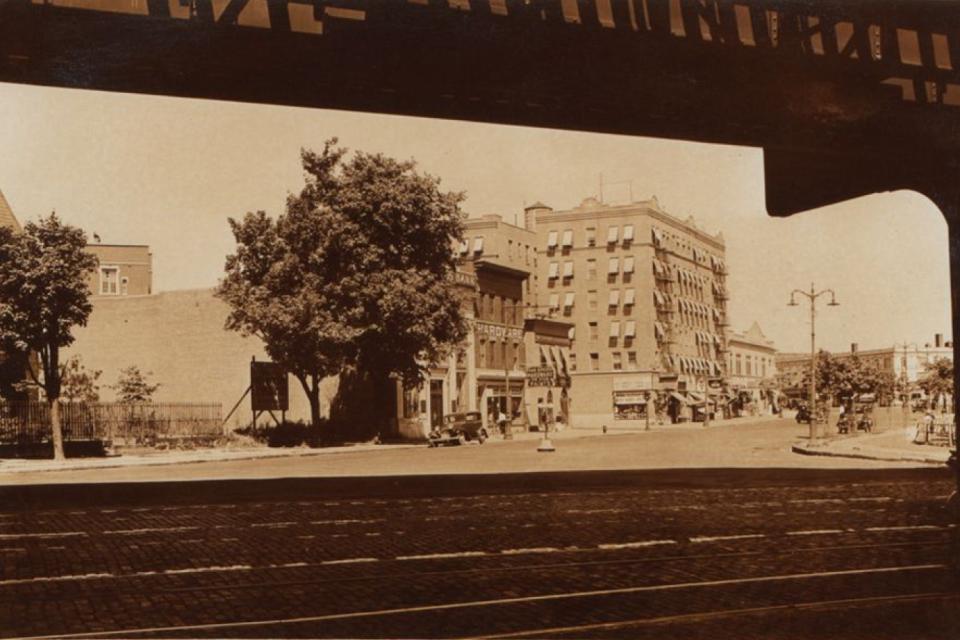
1925
In 1925, Rudin Management Company is founded when Samuel Rudin and his siblings build the family’s first project, a multi-family residential building at 1400 Benson Street in the Bronx.
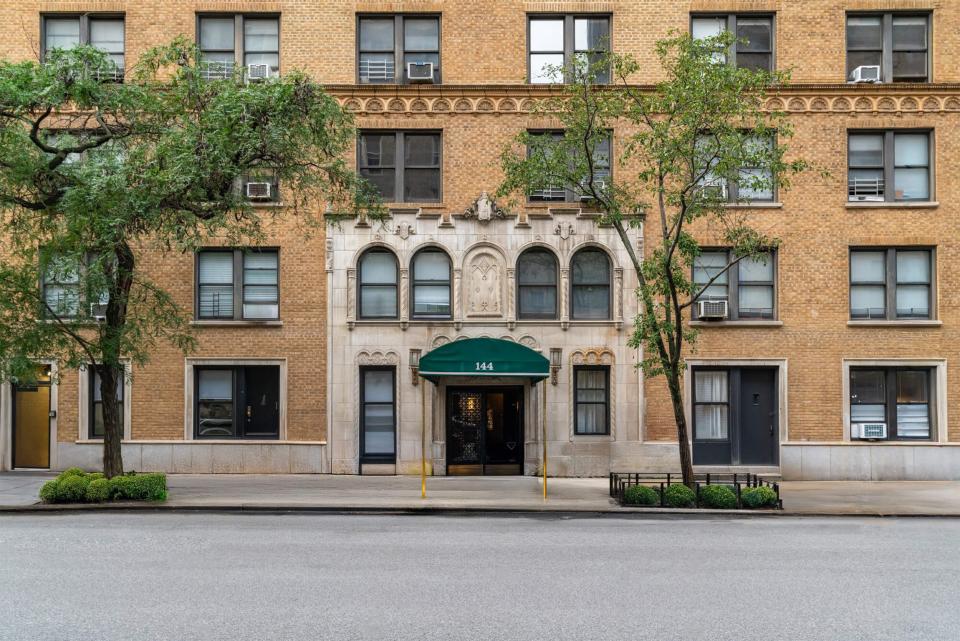
1928–1944
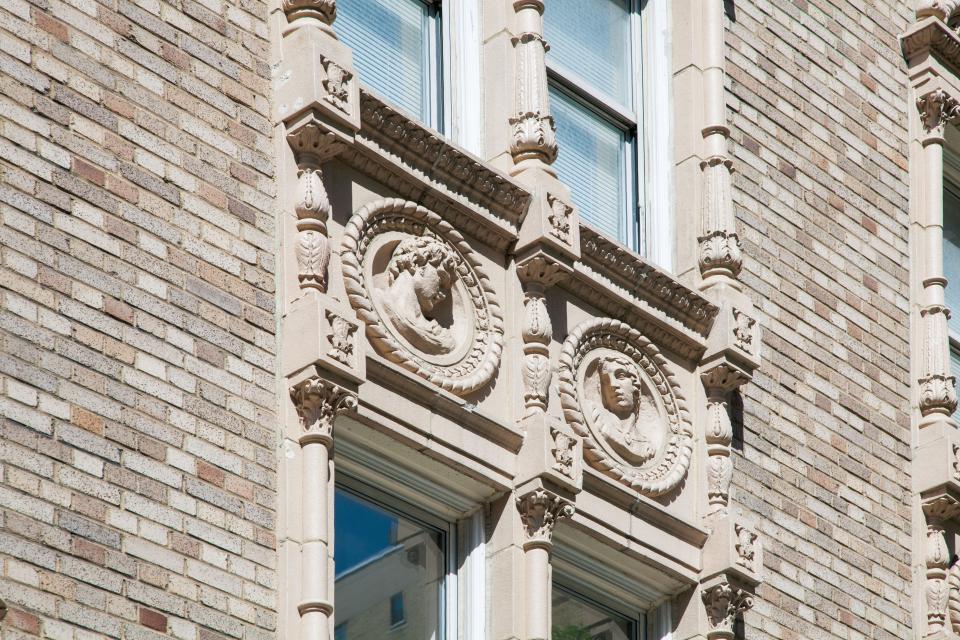
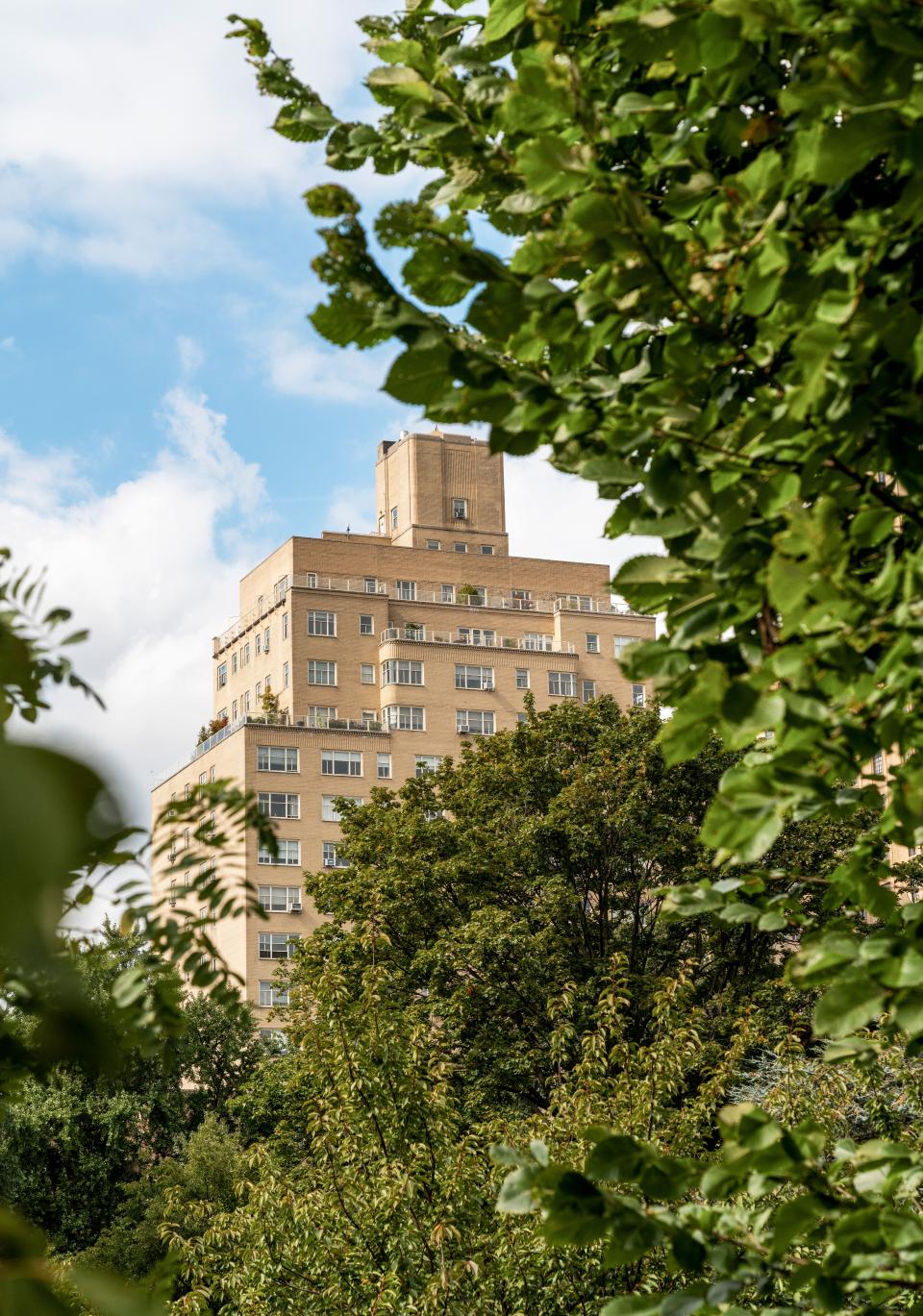
By 1928, the family completes building 144 West 86th Street. During this period, Rudin Management Company focuses on residential growth, building and acquiring nine apartment buildings on the Upper West Side, establishing a foundation for long-term and community stewardship.
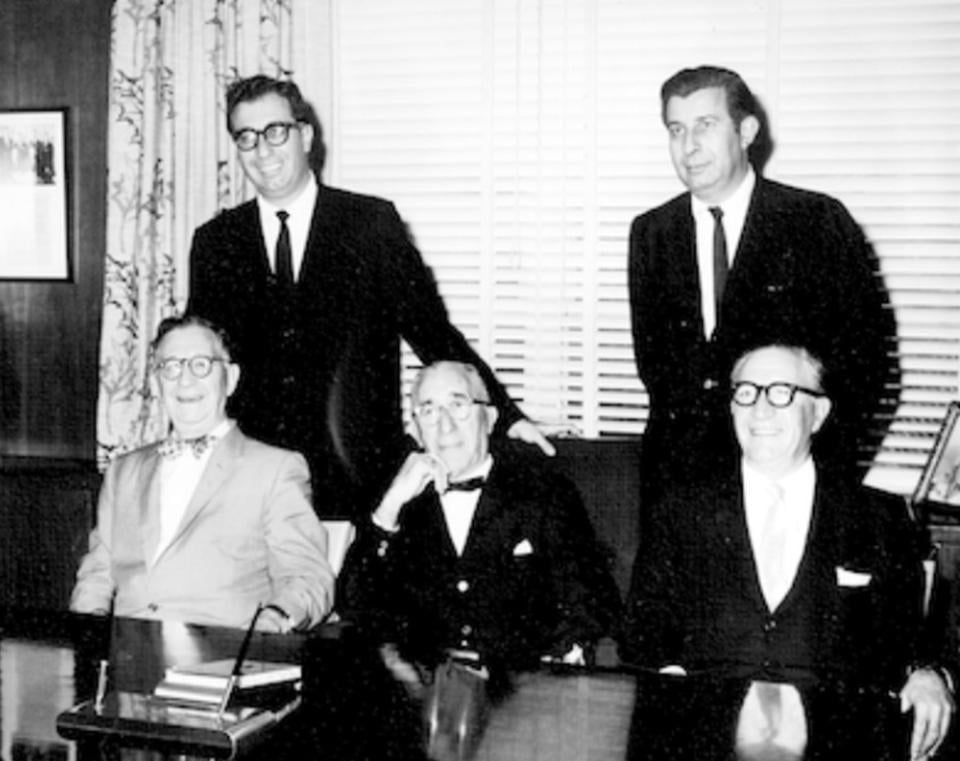
Lewis Rudin and Jack Rudin standing behind the three Rudin brothers. Starting from left, the seated men are Edward Rudin, Samuel Rudin, and Henry Rudin.
Source: The Rudin Family
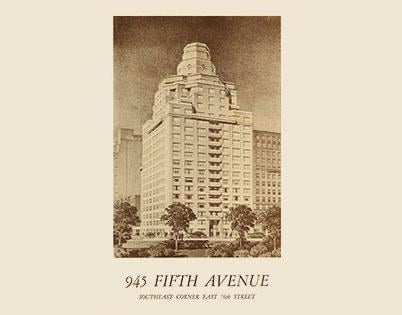
Original brochure for 945 Fifth Avenue.
Source: Rudin Management Company, Inc.
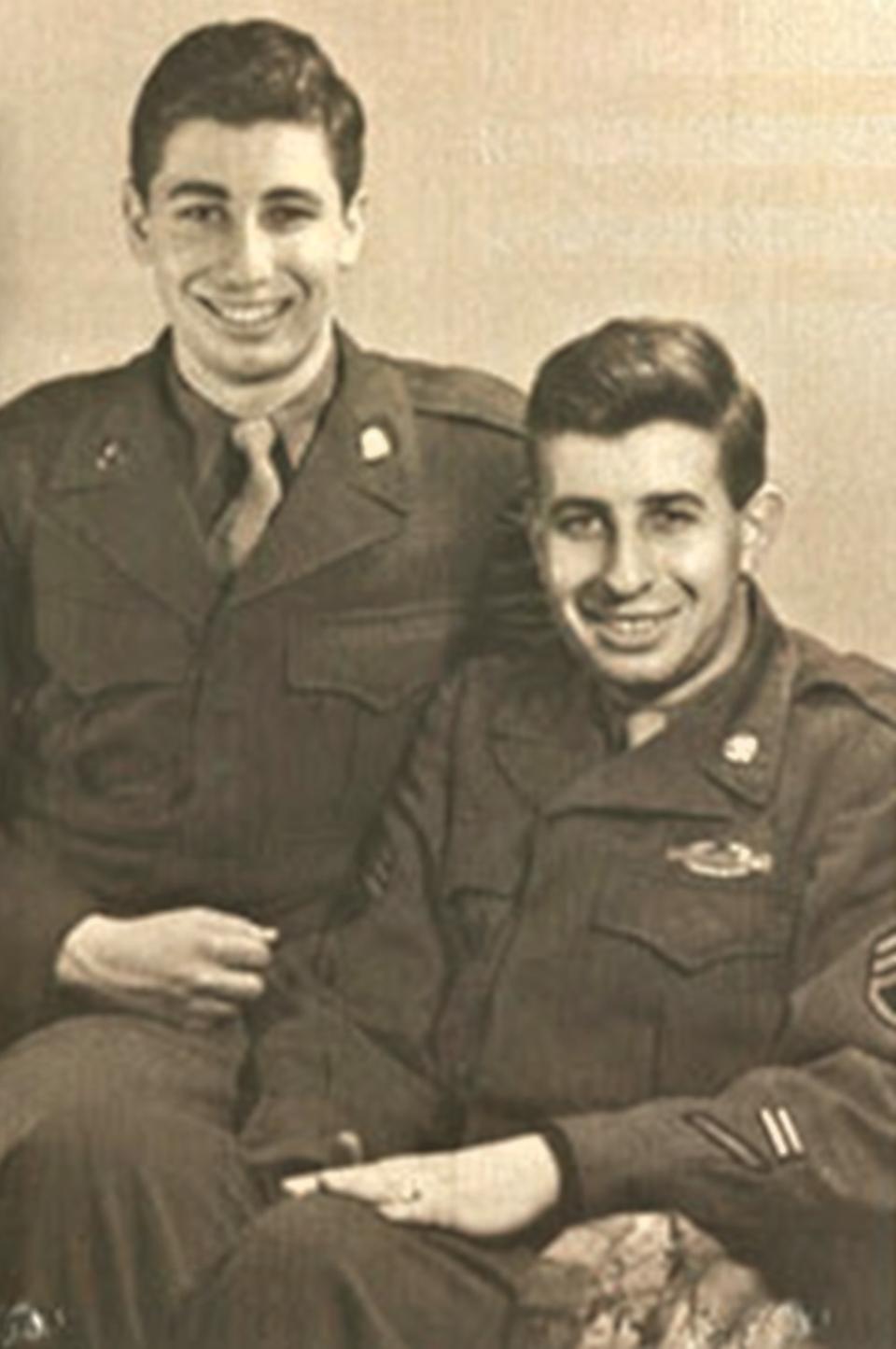
Jack and Lewis Rudin in military uniform.
Source: The Rudin Family
1945
After serving in the United States Army in World War II, Sam’s sons, Jack and Lewis, join the family business. The family develops 300 East 57th Street, which is the first apartment building to be erected in New York City after World War II, as well as 65 Central Park West and 945 Fifth Avenue.
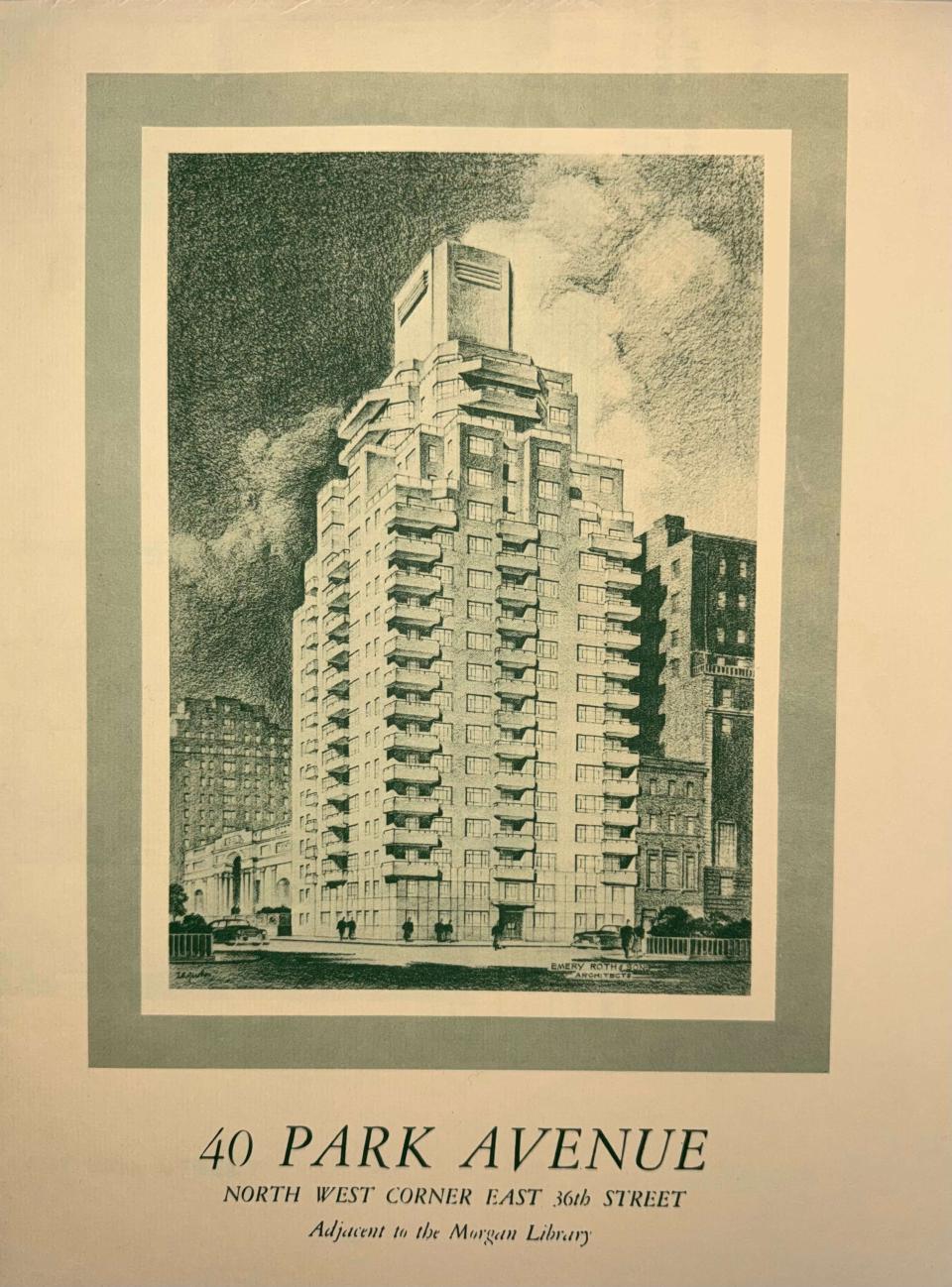
1950–1954
In the early 1950s, the family continues to expand its residential footprint, developing two additional apartment buildings, 40 Park Avenue and 2 Fifth Avenue, extending their presence into new neighborhoods and delivering one of New York City’s first contextually designed buildings.
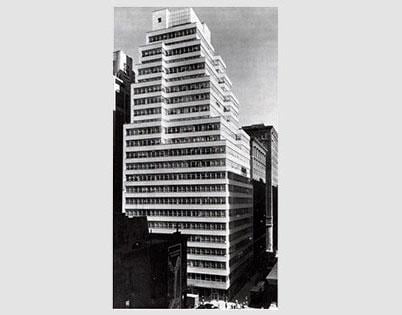
The 24-story streamline wedding cake skyscraper at 415 Madison Avenue, northeast block of 48th Street.
Source: Robert A.M. Stern, Thomas Mellins, David Fishman, New York 1960: Architecture and Urbanism Between the Second World War and the Bicentennial (New York: The Monacelli Press, 1997)
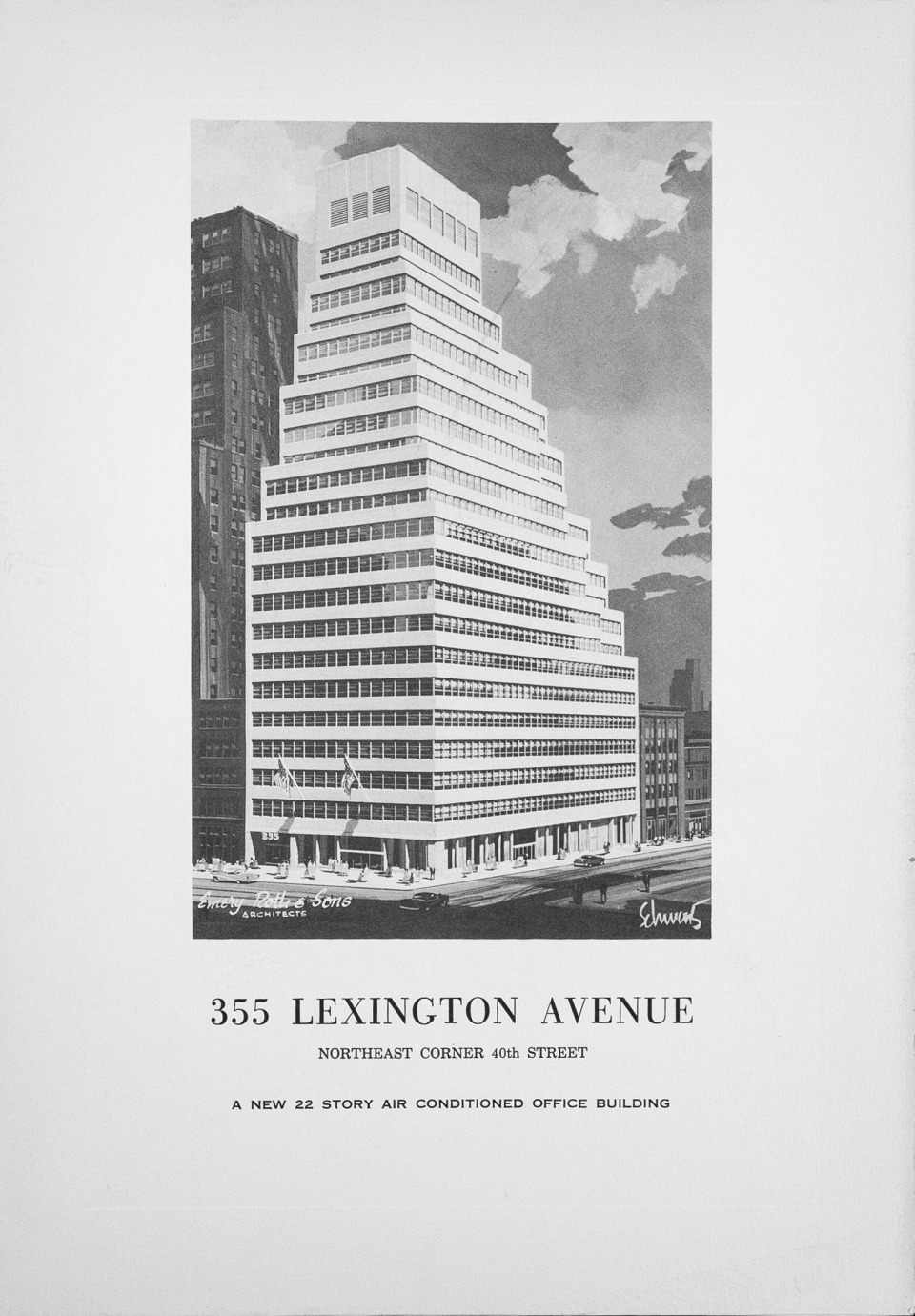
1955–1958
In 1955, the family builds its first office building at 415 Madison Avenue, marking its foray into commercial development and the beginning of a defining new chapter.
Beginning in 1958 with the completion of 355 Lexington Avenue, the company enters a period of significant growth.
1960–1968
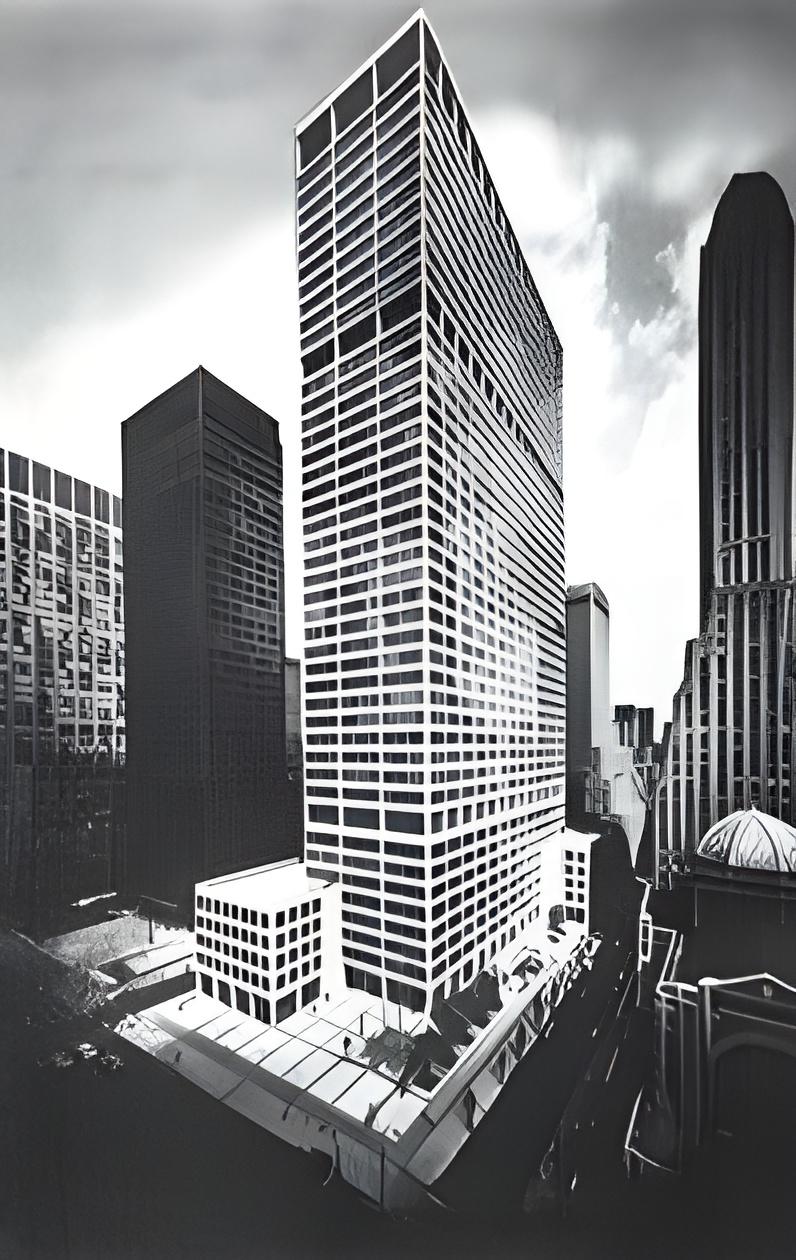
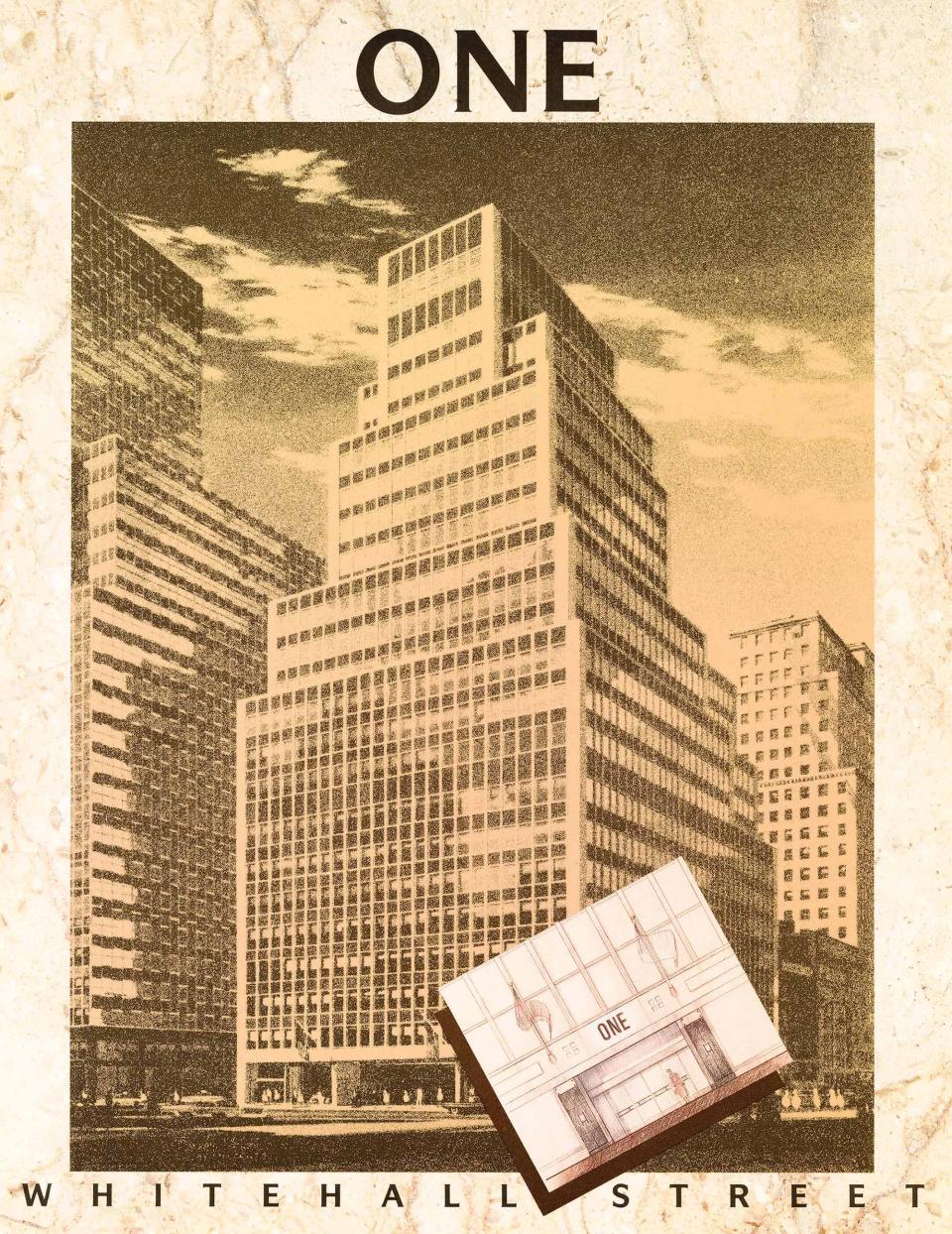
Throughout the 1960s, the family expands their commercial office presence by nine new buildings across Manhattan while continuing to develop residential buildings, often advancing multiple projects simultaneously. 80 Pine Street opens in 1960, followed by One Whitehall Street (1961); 215 East 68th Street (1962); 845 Third Avenue (1963); and 641 Lexington Avenue, which is on the site of Louis Rudin’s original 1905 brownstone, along with 110 Wall Street (both in 1964).
In 1968, the family completes 345 Park Avenue, its largest office building and the cornerstone of its commercial portfolio, establishing the firm’s headquarters and a defining presence in Midtown Manhattan.
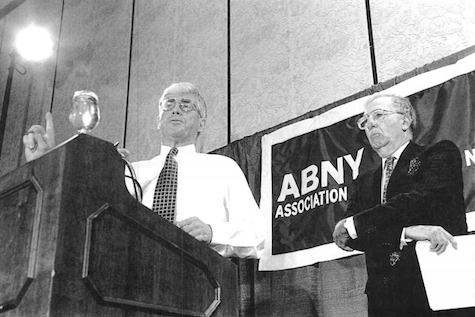
Lew Rudin at an ABNY meeting.
Source: Association for a Better New York
1971
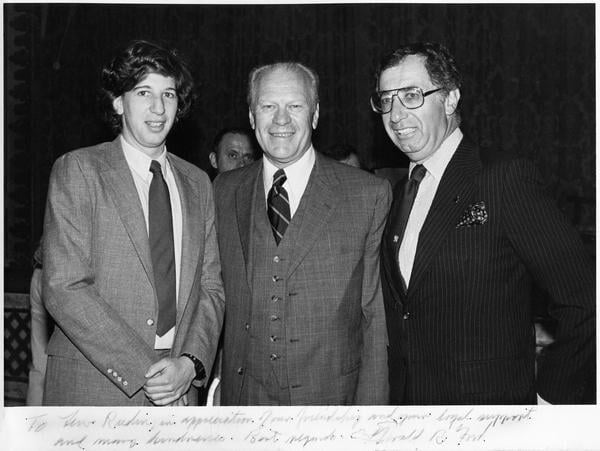
In 1971, as New York City faces one of the worst fiscal crises in its history, Jack and Lewis, along with other like-minded business people, co-found the Association for a Better New York to bring business, civic, and political leaders together around the shared goal of making New York City a better place to live, work, and visit. As a part of this effort, Lewis convinces property owners to prepay their taxes, helping save the city from insolvency.
Reflecting this confidence in New York City’s long-term future, the family continues to invest and build, developing 41 Madison Avenue and 254 East 68th Street in 1974, and 211 East 70th Street two years later.
1976
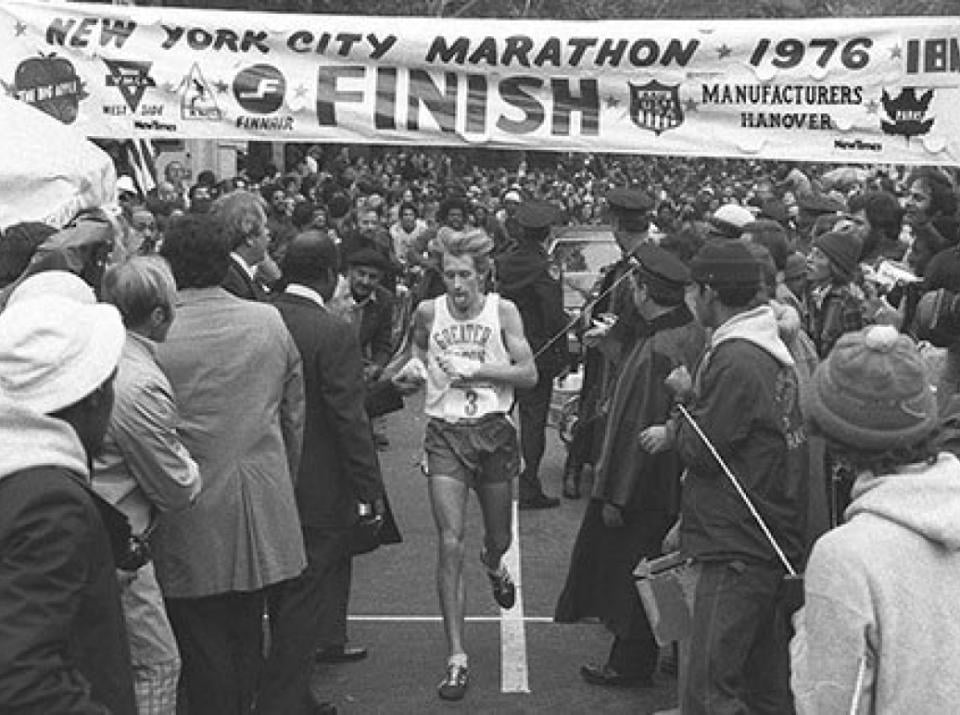
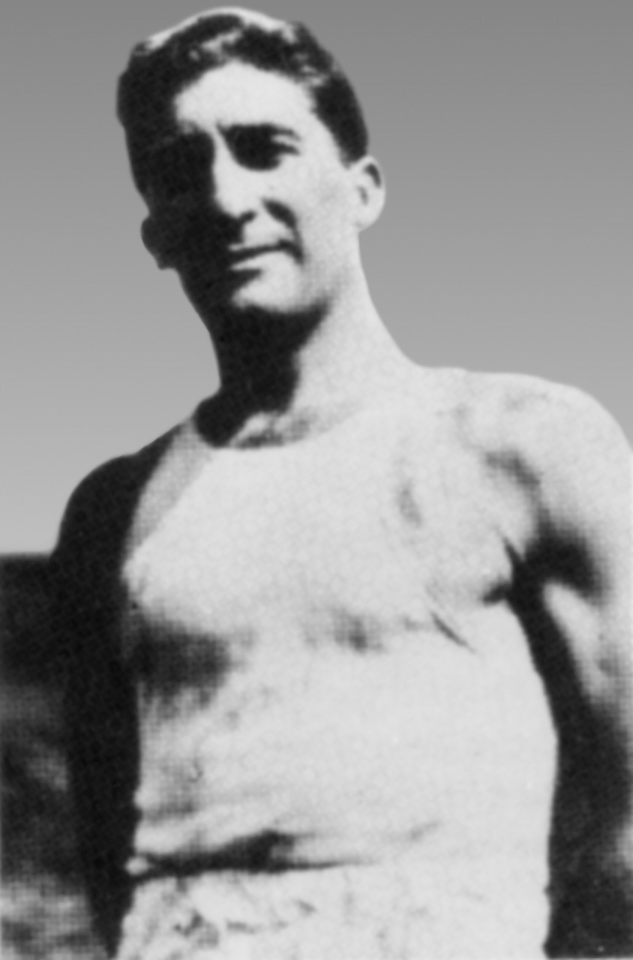
In 1976, as part of New York City’s bi-centennial, Jack and Lewis Rudin sponsor the first five-borough NYC Marathon and present the winners with the Samuel Rudin Trophy, dedicated to their late father Sam, a long-distance runner.
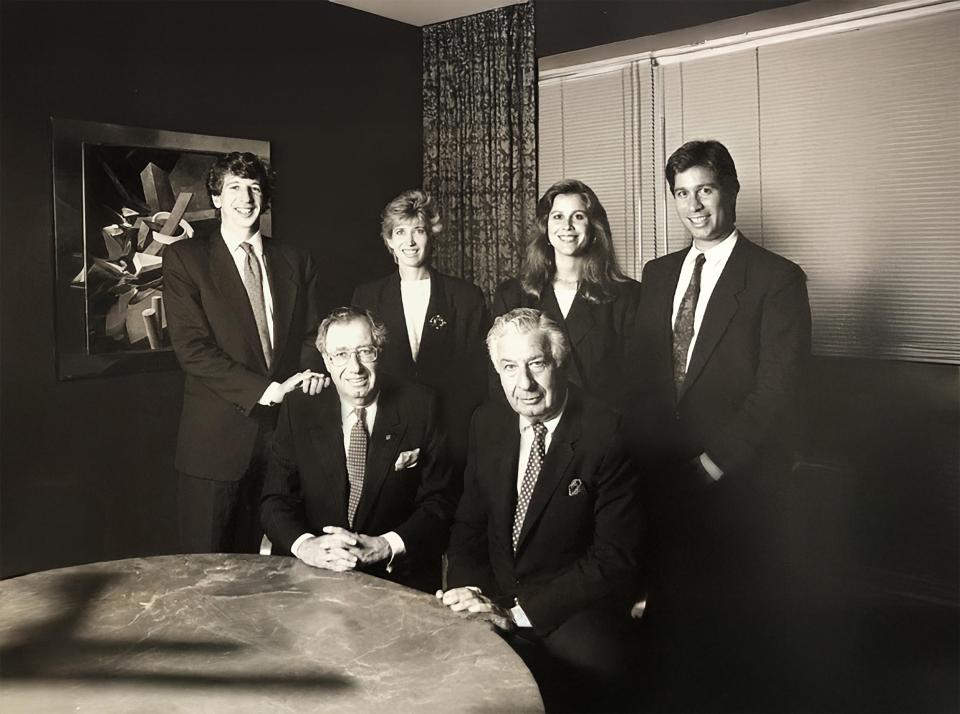
Two generations of the Rudin family.
Source: The Rudin Family
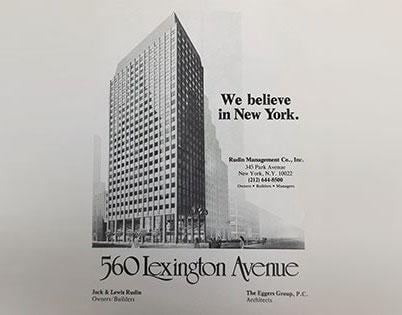
560 Lexington Avenue brochure.
Source: The Rudin Family
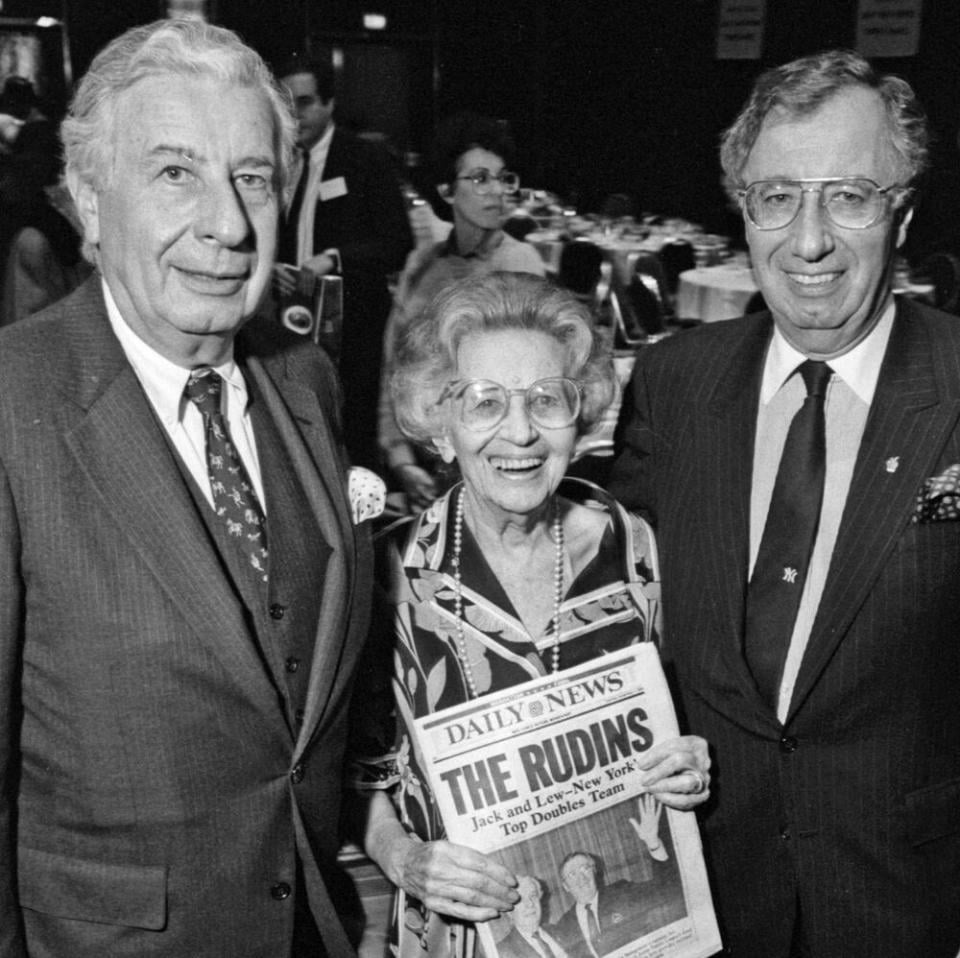
May Rudin, the wife of Samuel Rudin, with her sons Jack and Lew in 1988.
1980–1989
The third generation, Eric and Madeleine, children of Jack, and Bill and Beth, children of Lewis, assume more active roles in the business, introducing fresh perspectives while carrying forward the firm’s enduring values and long-term vision.
The family turns its attention solely to commercial developments, opening three more buildings in the 1980s: 560 Lexington Avenue, which wins the Bard Award for its innovative design, in 1980; 40 East 52nd Street in 1986; and 1675 Broadway, one of the first new office towers on the west side of Manhattan, in 1989.
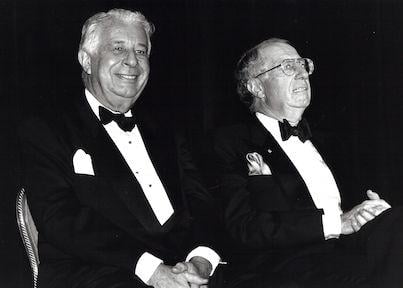
Jack and Lewis Rudin become co-chairmen of the company in 1993.
Source: The Rudin Family
1990–1994
In 1993, Jack and Lewis are named Co-Chairmen, and Bill Rudin becomes President of Rudin Management Company.
Continuing the family’s longstanding civic engagement, Bill helps form the Downtown Alliance, an initiative to revitalize Manhattan’s downtown business district at a time when more than 30 million square feet of office space stands vacant.
1995–1999
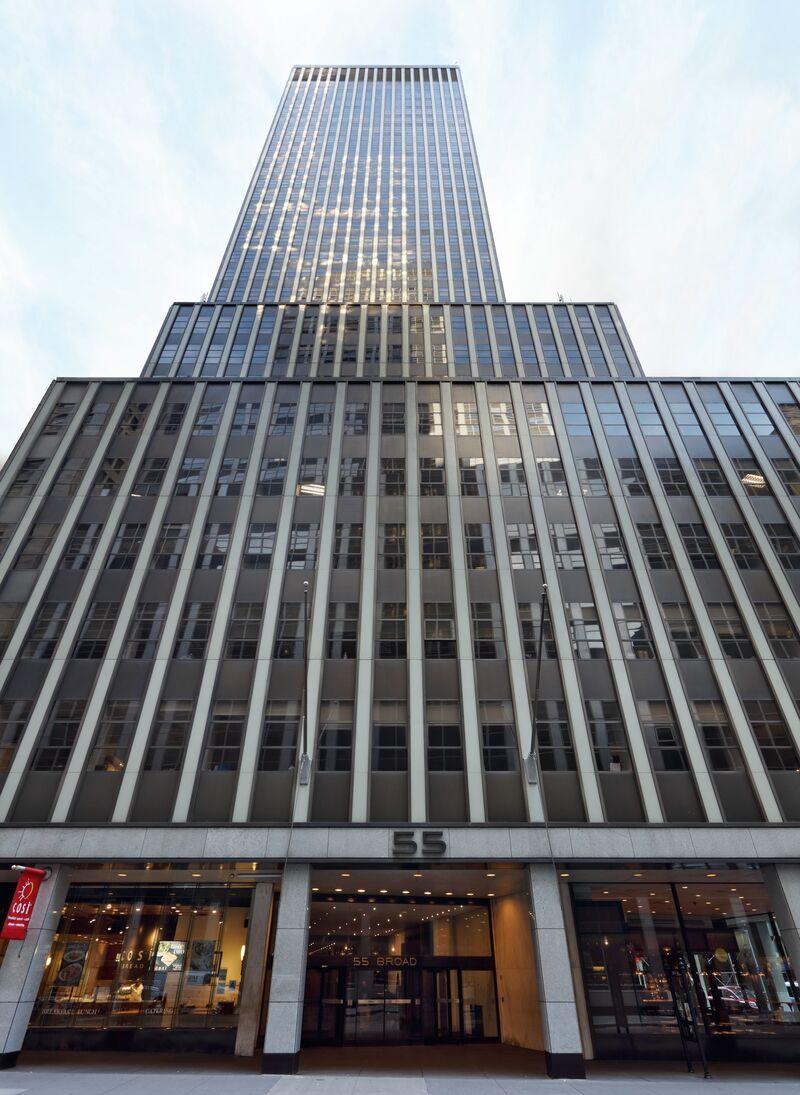
In 1995, the family re-positions 55 Broad Street and renames it “The New York Information Technology Center”, the first fully wired office building in the world.
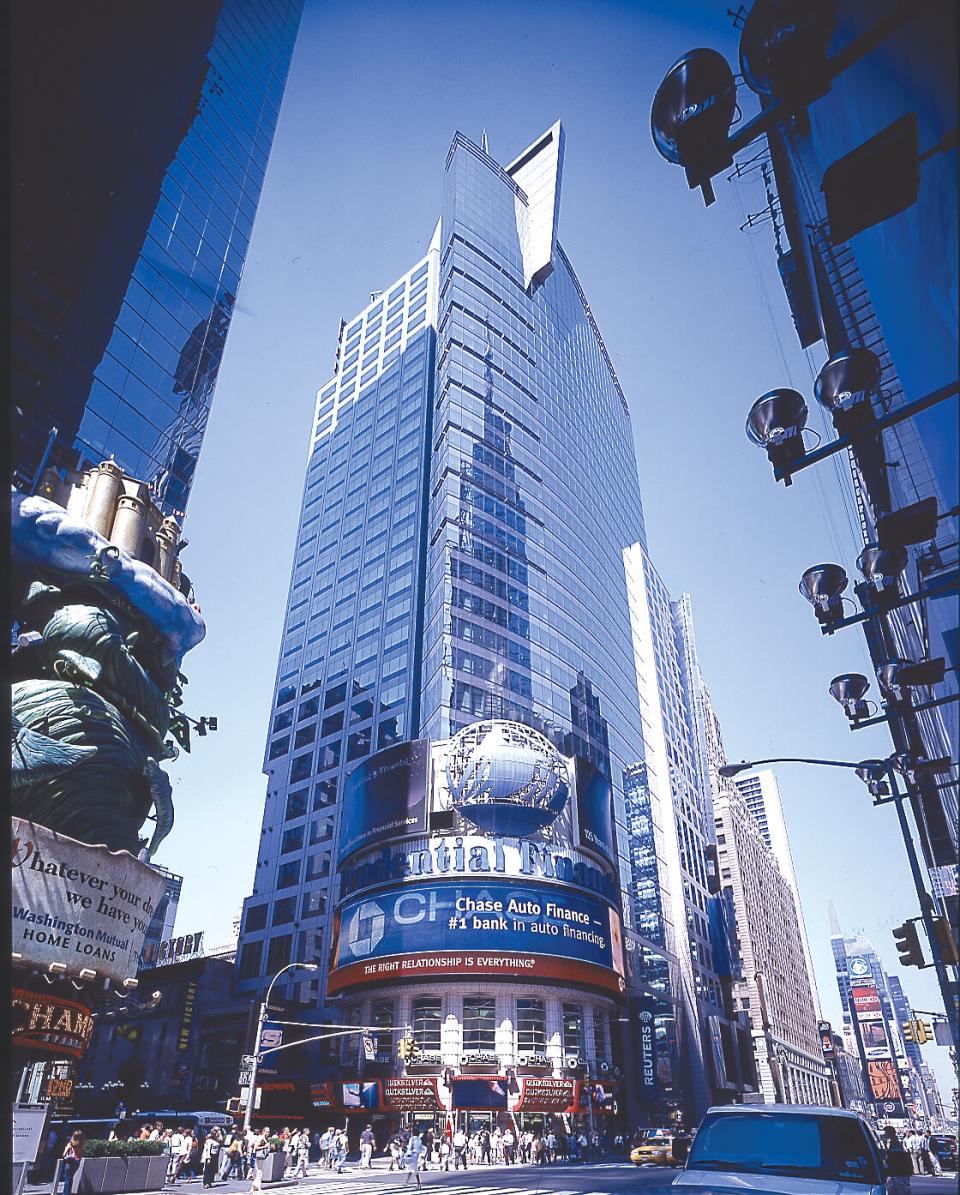
In 1997, Reuters selects Rudin as co-owner, developer, and design partner for its North American headquarters at 3 Times Square. The 30-story, 925,000 SF office tower, which incorporates state-of-the-art systems and a focus on sustainability, opens fully leased in 2001.
In 1999, the company buys 32 Avenue of the Americas from AT&T, which becomes the only office building in the portfolio not built by the family.
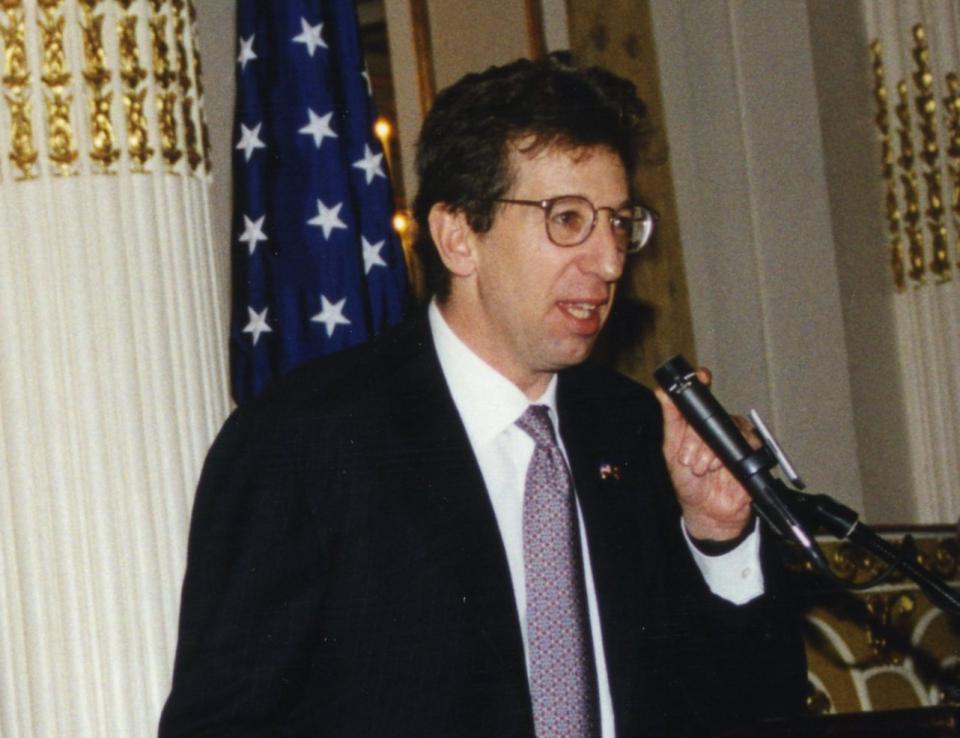
Bill Rudin hosts his first ABNY breakfast as Chairman.
2000–2004
The Association for a Better New York (ABNY) names Bill Rudin as Chairman in October 2001.
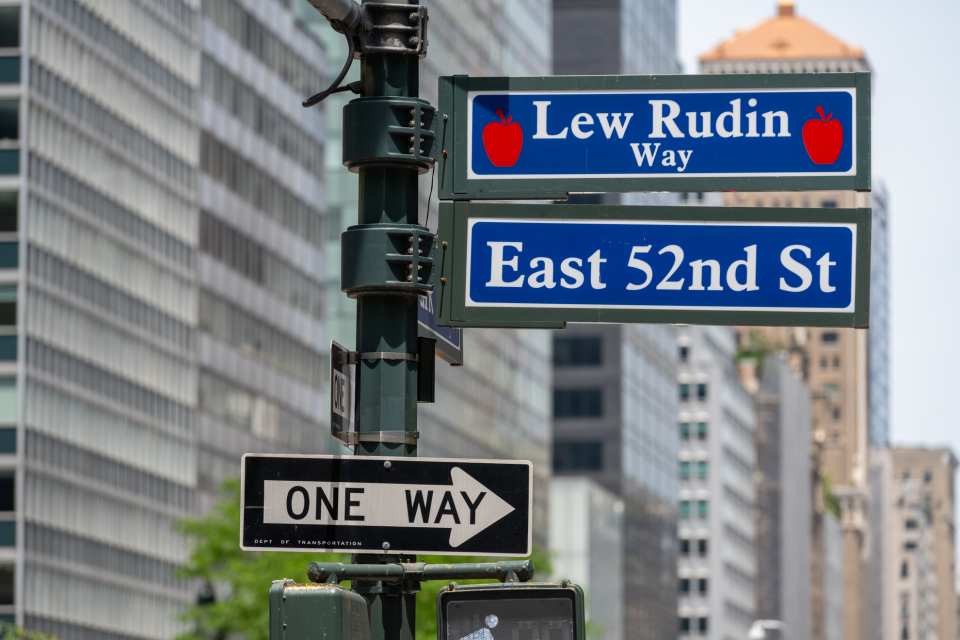
In 2002, Mayor Michael Bloomberg officially names 52nd Streets and Park Avenue “Lew Rudin Way” as a tribute to Lew’s lifelong dedication to New York City.
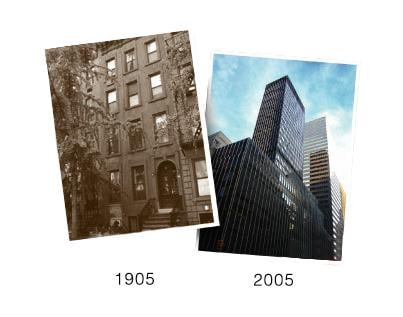
Original brownstone and current skyscraper at 641 Lexington Avenue.
Source: The Rudin Family
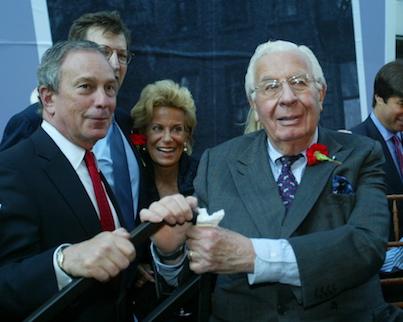
Mayor Bloomberg, Jack Rudin, and family celebrate the 100th anniversary of Louis Rudinsky’s ownership of real estate in New York City.
Source: The Rudin Family
2005–2008
In 2005, the family celebrates 100 years of Louis Rudinsky owning real estate in New York City with a block party on 54th Street.
Bill’s children, Samantha and Michael, join the company in 2007 and 2008 respectively, becoming the fourth generation to work in the business.
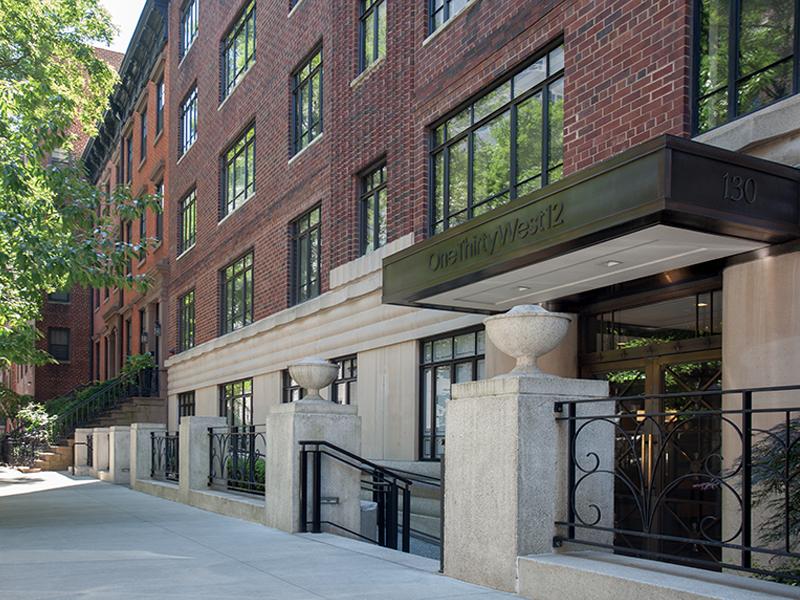
A photo of 130 West 12th Street.
Source: Rudin Management Company, Inc.
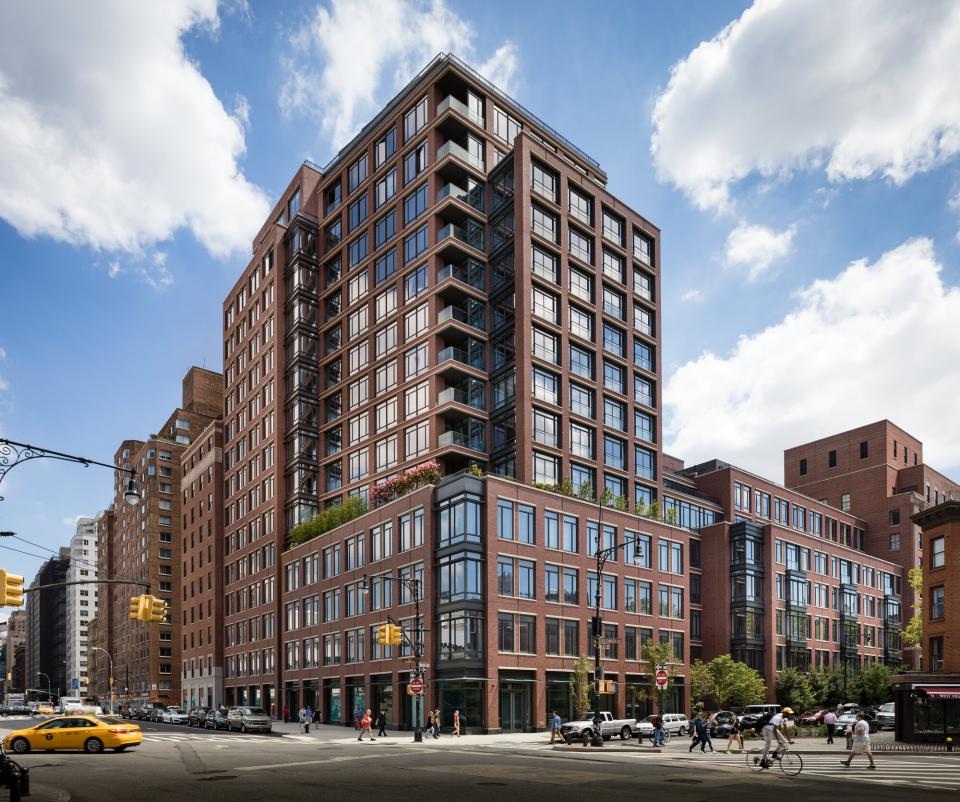
A photo of The Greenwich Lane.
Source: Rudin Management Company, Inc.
2009–2012
Beginning in 2009, the family is selected to redevelop key components of the former St. Vincent’s Hospital complex in the West Village. Early work includes the transformation of 130 West 12th Street, one of the original hospital buildings, which becomes the first residential redevelopment in New York City to achieve LEED Gold certification and receives Global Green USA’s Sustainable Design Award.
In 2012, the family partners with Global Holdings to advance the broader redevelopment of the former hospital campus. This plan ultimately becomes The Greenwich Lane, a residential condominium complex that receives final approvals from the City and reimagines nearly a full city block between Eleventh and Twelfth Streets.
The Greenwich Lane comprises five condominium buildings and five townhouses with approximately 200 luxury residences all centered around a private central garden. The development features a comprehensive suite of amenities including a state-of-the-art fitness center, yoga and treatment rooms, a 25-meter swimming pool, golf simulator, screening room, residents’ lounge and dining room, and children’s playroom.
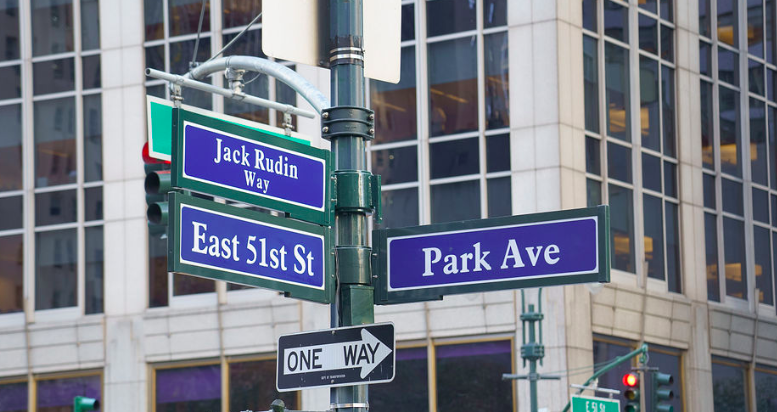
At the corner of Jack Rudin Way and Park Avenue.
Source: Jean-Pierre Uys
2017–2019
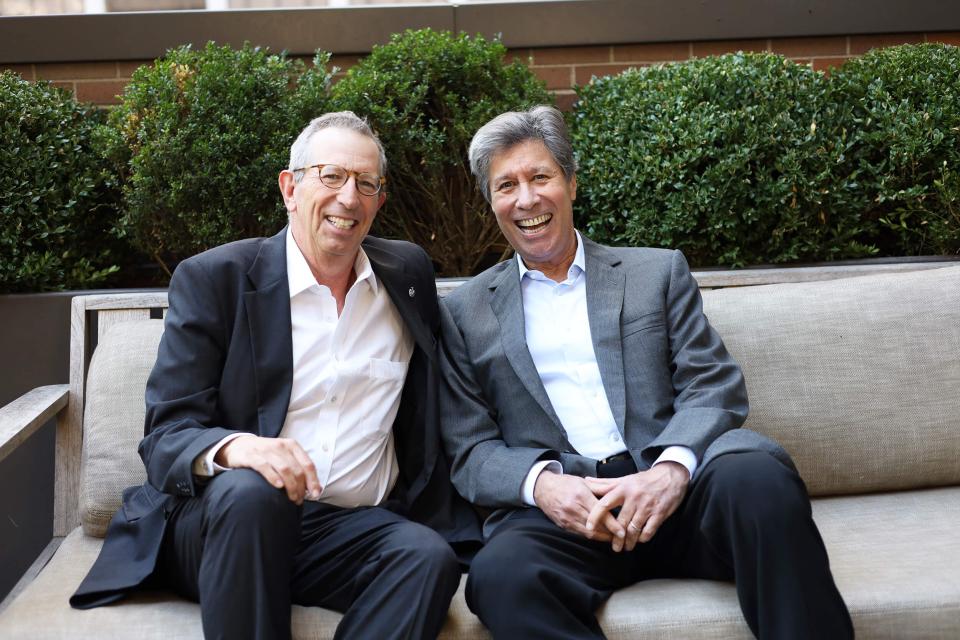
In July 2017, Bill and Eric Rudin are named Co-CEOs of Rudin Management Company.
In October 2018, New York City unveils “Jack Rudin Way” on the corner of 51st Street and Park Avenue in honor of Jack. The street corners of either side of the company’s headquarters are now named in recognition of the brothers’ contributions to the City.
In October 2019, Dock 72 opens in the Brooklyn Navy Yard. The 16-story building is the first ground-up office building to be constructed in Brooklyn in over a decade.
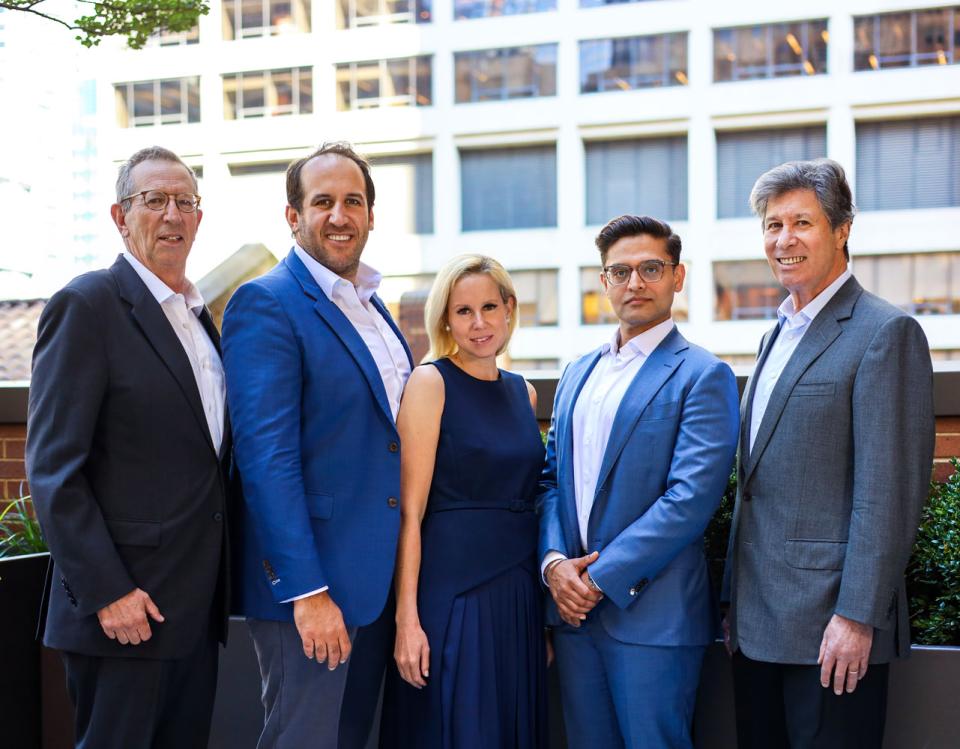
From left: Bill Rudin, Michael Rudin, Samantha Rudin Earls, Neil Gupta, and Eric Rudin.
Source: Grace Boak
2024
In 2024, Samantha Rudin Earls and Michael Rudin become Co-CEOs, Neil Gupta is named President, and Bill Rudin and Eric Rudin are Co-Executive Chairmen. This is historic as Samantha is Rudin’s first female CEO and Neil is the first non-family member to hold this title.
2025
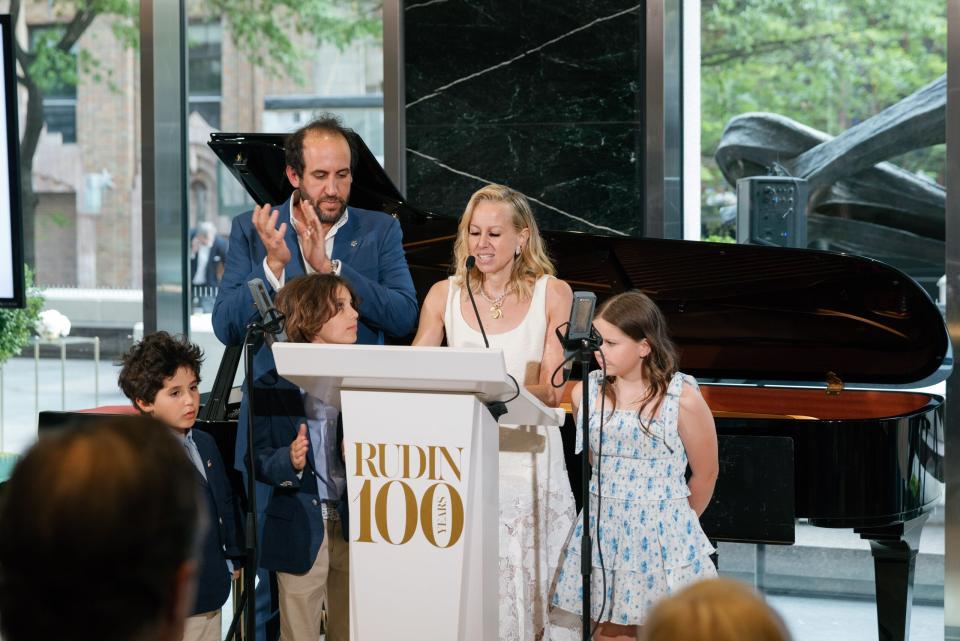
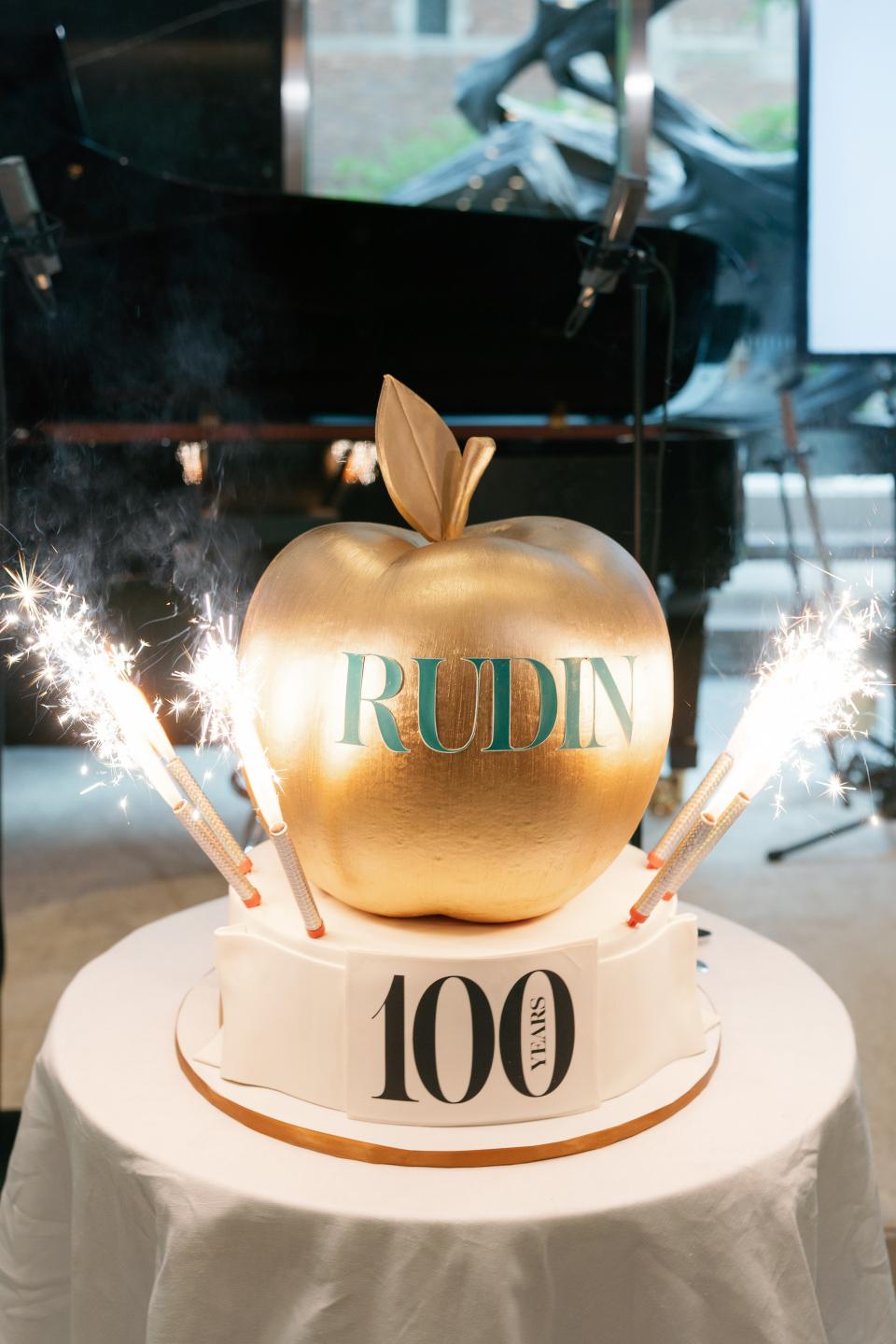
In 2025, Rudin honors their centennial with a refreshed brand and a celebration commemorating their enduring legacy and the vision for the future.